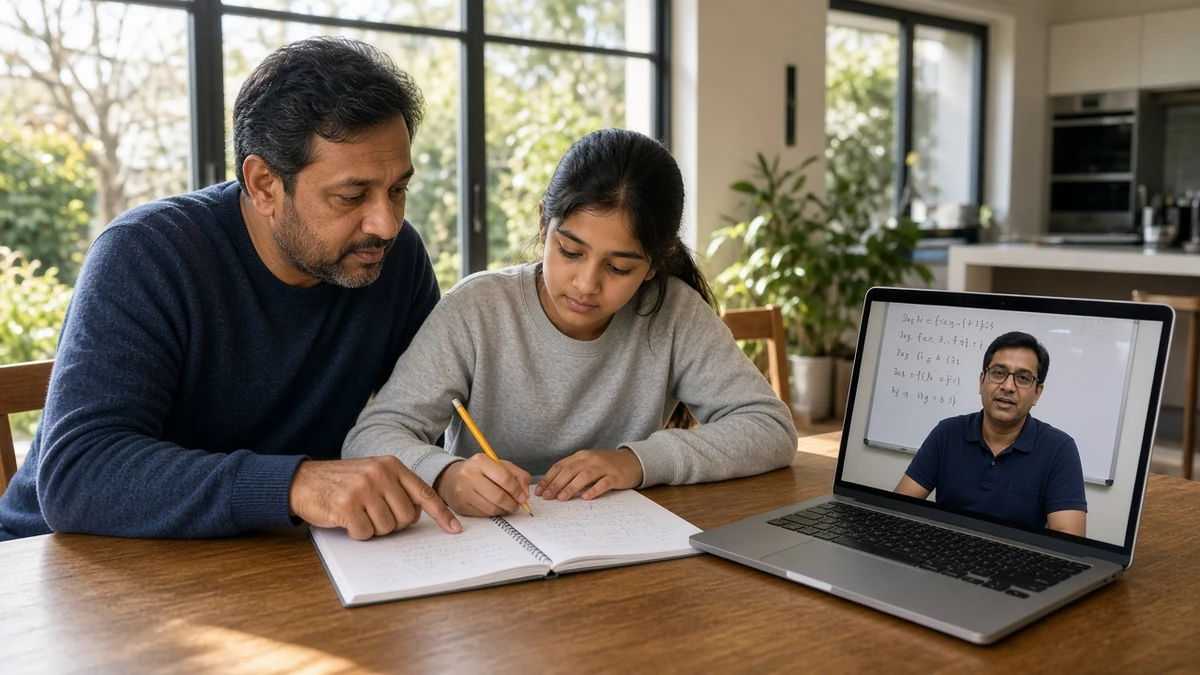
Hindi Tutoring for Indian-Origin Kids in USA & Canada
A practical guide for Indian-origin families in North America who want regular Hindi practice with a patient online tutor, without turning it into a second exam.

TutorPapa Admin
17 Nov 2026 · 5 min read
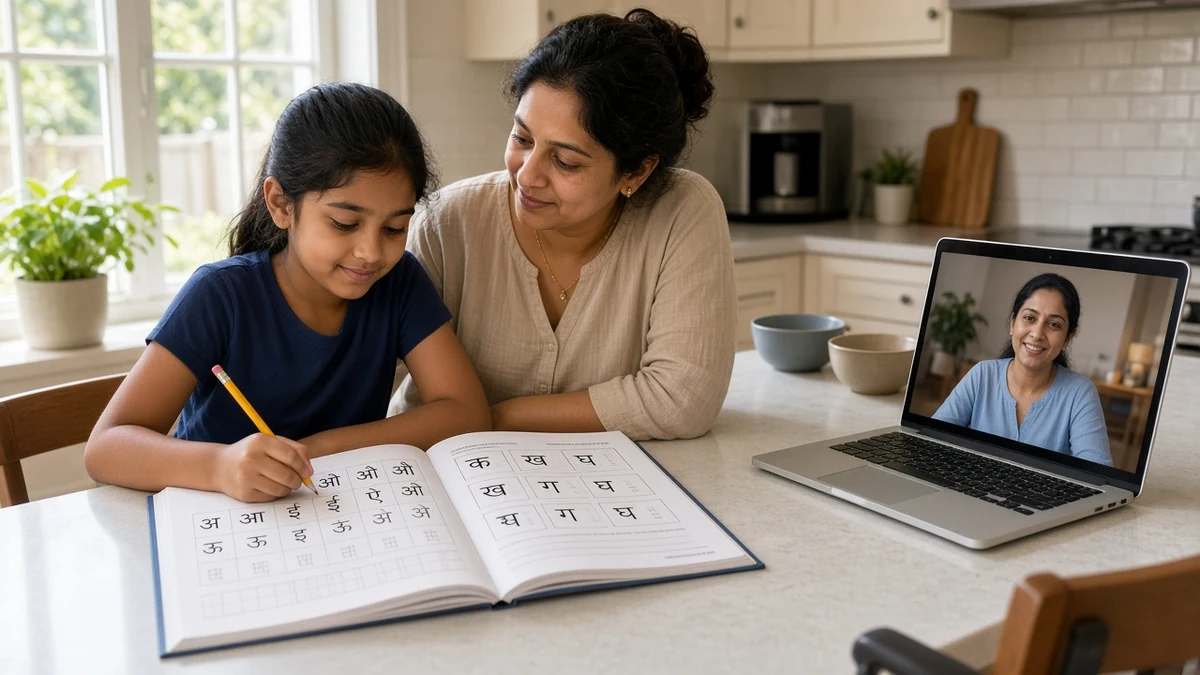
Many Indian-origin children in the United States and Canada speak some Hindi at home, then slowly switch to English at school, in clubs and with friends. Parents often notice it first in small ways: a child answers in English, avoids reading a simple story, or feels shy speaking to grandparents on a video call. A short, regular Hindi class with a patient tutor can protect the language without turning it into a second “exam subject.” This guide is practical, not promotional, and it does not invent success rates or level scores.
TutorPapa connects families with certified Indian tutors for live 1-on-1 video classes. The office is in Lucknow, India; there are no foreign branches. You can browse verified online tutors, request a free demo, and continue only if the fit feels right. Families in North America often start from the pages for online tutors for students in the USA or online tutors for students in Canada.
What “keeping Hindi alive” usually means
It rarely means a full Indian-board Hindi syllabus in the first term. For most children abroad, the aim is more modest and more useful:
- comfortable speaking at home and with relatives;
- reading simple stories and school-level words in Devanagari;
- writing short sentences without fear; and
- enough cultural context — festivals, songs, everyday phrases — that the language feels like it belongs to them.
If your child also studies Hindi as a subject in a weekend school, share that workbook with the tutor so the two do not pull in different directions. If they do not, say so clearly, and ask the tutor to start from conversation and script rather than from a Class 8 examination paper.
How to judge a tutor for a child who lives abroad
Look for someone who is used to children who think in English. A good demo is easy to recognise: the tutor speaks clearly, switches between Hindi and English when the child is stuck, and does not scold hesitation. Ask how they will handle a child who understands more than they can say. Ask whether lessons will include listening (a short story or rhyme) and a little reading, not only worksheet drilling.
You do not need a famous “Hindi expert” brand. You need consistency and kindness. Our earlier article on Hindi online classes for NRI children covers the same family situation from another angle; use both if you are still deciding how formal the class should be.
A weekly rhythm that fits US and Canadian evenings
Two or three 45–60 minute lessons a week usually beat a single long Saturday session. India Standard Time is UTC+5:30 all year, so:
- a 7:00 am class in New York is late afternoon in India (the exact IST hour shifts when the US or Canada changes clocks);
- after-school hours in Toronto or Vancouver often line up with morning or early afternoon in India, especially on weekends.
Agree the slot in both clocks and re-confirm after daylight saving changes. A wider scheduling walkthrough is in online classes across time zones for the USA, UK and Australia. Live class times on TutorPapa are also shown in your local time next to IST.
Hindi and school maths can share a week, not a headache
Some parents want Hindi and maths in the same term, especially if the child is adjusting to a new curriculum in Canada or the US. That is reasonable, but do not park both subjects in the same tired evening. If two children, or two subjects, need regular time, look at the Family Pass and Learner Pass on the pricing page. The Learner Pass is ₹10,000 a month for one hour of class every day for one student. The Family Pass is ₹25,000 a month for up to three students, one hour each day. Prices are in Indian rupees; the currency switcher only shows an approximate USD or CAD figure, and you are charged in INR. The free plan still includes unlimited free demo requests.
If maths after a curriculum change is the bigger worry, see maths tutoring for Indian families in Canada and Australia.
What a first term can look like
For a child who speaks a little Hindi at home but does not read comfortably, a first term might be: greetings and home vocabulary, vowels and consonants in small groups, short reading lines, and one “show and tell” in Hindi each week. For a child who already reads, the tutor can move to short stories, simple letters to grandparents, and spoken paragraphs on everyday topics. There is no single official “NRI Hindi exam” that every family must chase. If you later want a formal qualification, ask the tutor what they have actually taught before, and check the relevant board or exam body yourself rather than relying on marketing labels.
For school-board Hindi inside India, the Central Board of Secondary Education publishes curriculum information on the CBSE website. Children living abroad do not have to follow that syllabus unless they are enrolled in it.
Involving the family without turning dinner into a test
Ten minutes of informal Hindi at dinner helps more than a tense drill. Ask the tutor for a short weekly word list, not a long extra homework pack. Video calls with grandparents work better when the child has prepared one small story, not a performance. If a child resists, shorten the lesson rather than adding pressure; a missed month is easier to repair than a sour relationship with the language.
Before you book
Shortlist two tutors, take a free demo at the time you plan to keep, and watch how your child behaves in the second half of the class, not only in the first five minutes. Read how parents abroad choose an online tutor if you want a broader checklist, and browse online tutors worldwide if your family splits time between countries. When you are ready, find a Hindi tutor and start with a demo — not a long prepaid package you have not tested.
Frequently asked questions
Not unless they are enrolled in that board. Many children abroad need conversation, reading and writing for home and family life first. Share any weekend-school workbook so the tutor does not set a conflicting plan.
Two or three short lessons are usually easier to keep than one long session. Agree the slot in your local time and in Indian Standard Time, and re-confirm after daylight saving changes in the USA or Canada.
It is better to keep them separate so neither subject is rushed. If more than one child needs regular lessons, look at the Family Pass on the pricing page: ₹25,000 a month for up to three students, one hour each day, charged in Indian rupees.
Yes. TutorPapa’s free plan includes unlimited free demo requests. Book the demo at the time you plan to keep, and continue only if your child is comfortable.
Looking for a tutor?
Tell us what you need — get matched with verified tutors in 2 hours.