How to Become an Online Tutor in India and Teach Students Worldwide

TutorPapa Team
06 Nov 2026 · 5 min read
Online tutoring has opened a door that did not exist for most Indian teachers a decade ago: the chance to teach students in other cities and other countries from home. A maths teacher in Lucknow can help a student in Dubai with board exam preparation; a chemistry specialist in Pune can guide a student in the UK through A-levels. If you are a qualified, experienced teacher, here is a practical, step-by-step guide to becoming an online tutor in India and reaching students worldwide.
Step 1: Check that you meet the basic requirements
Online tutoring platforms that care about quality set clear standards. On TutorPapa, tutors must be subject specialists with at least two years of teaching experience. This protects students and parents, and it means you join a community of serious educators. Experience can come from schools, coaching institutes, colleges or structured private tuition.
You will also need:
Strong command of your subject and the curricula you want to teach, such as CBSE, ICSE, state boards, IGCSE, IB or competitive exams.
Clear spoken communication in the language you will teach in, often English or Hindi.
Basic comfort with computers and video calls.
Step 2: Decide what and whom you will teach
Narrow focus helps students find you. Decide:
Subjects: for example mathematics, physics, chemistry, biology, accountancy or English.
Levels: primary, middle school, classes 9-12, undergraduate, or exam preparation such as JEE or NEET.
Curricula: Indian boards, international curricula or both.
Time zones: teaching students abroad often means early mornings or late evenings in India. Decide what fits your life.
Step 3: Set up a simple, professional teaching space
Device: a laptop or desktop is better than a phone for teaching.
Internet: a stable broadband connection, with mobile data as backup.
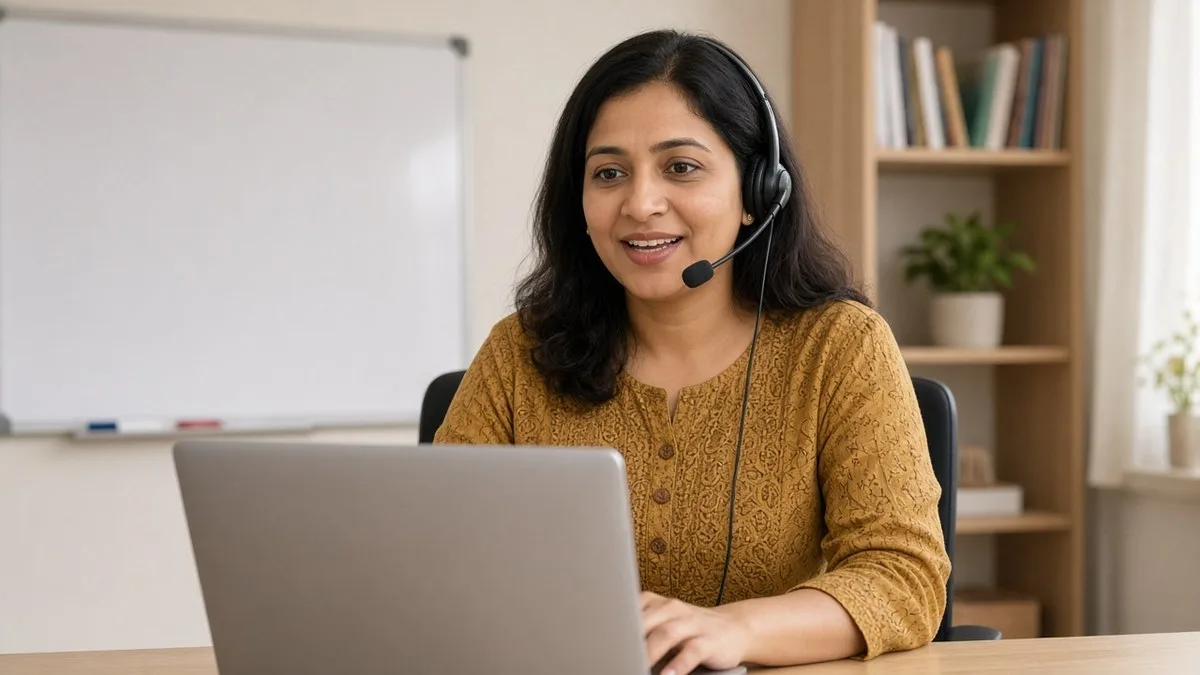
Audio: a headset with a microphone makes a big difference to clarity.
Camera and light: face a window or use a simple lamp so students can see you clearly.
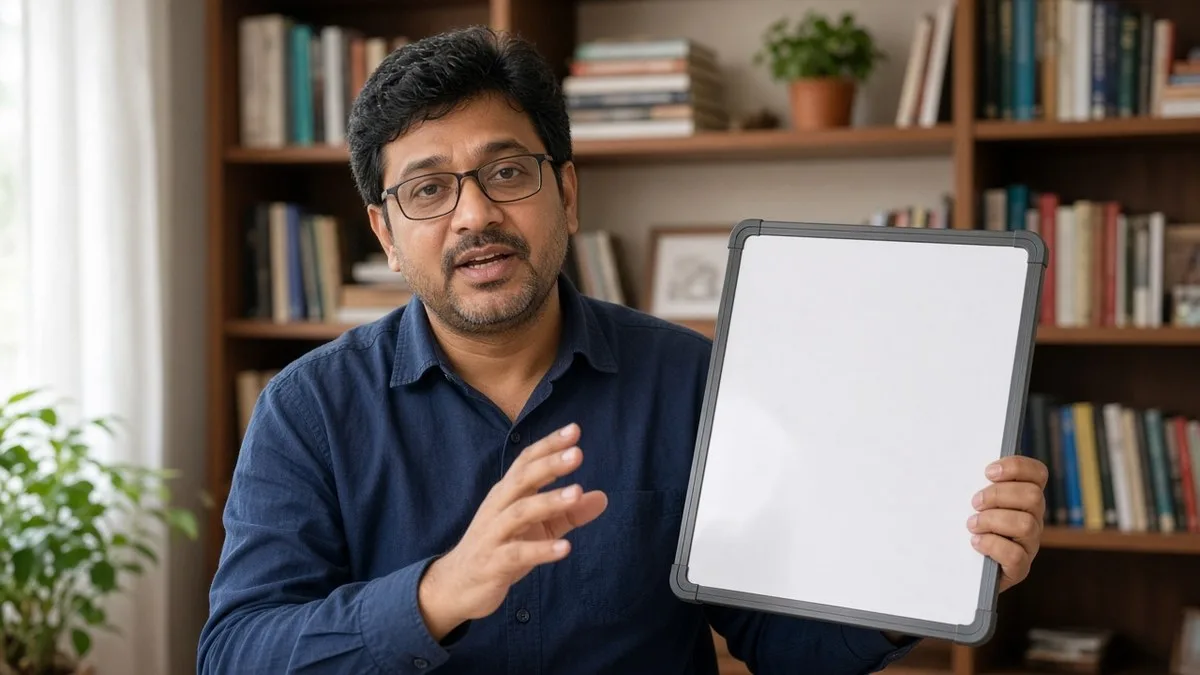
Writing tool: a digital pen tablet, or a small whiteboard you can show on camera.
Quiet background: a tidy wall or bookshelf works well.
Step 4: Create your tutor profile
Your profile is your first impression. Make it specific and honest:
Headline: "CBSE and IGCSE Mathematics Tutor, 8 years' teaching experience" tells a parent far more than "Experienced teacher".
About you: your teaching background, the levels you teach and your approach.
Qualifications: degrees, B.Ed. or relevant certifications.
Teaching style: for example, concept-first explanations, regular practice tests, or exam-focused revision.
Photo: a clear, friendly, professional photograph.
You can start the process on the TutorPapa become-a-tutor page.
Step 5: Prepare your first lessons
Online lessons need slightly more structure than classroom teaching because attention drifts faster on screen.
Start with a short diagnostic to understand the student's level.
Break lessons into short segments: explain, demonstrate, practise, check.
Use visuals, shared screens and worked examples.
End each session with a short recap and a clear task for next time.
Share notes or practice questions after the lesson.
Step 6: Teaching students in other countries
Teaching internationally has its own considerations:
Curriculum familiarity: learn the syllabus and exam pattern of the board you teach, for example IGCSE or A-level, before offering it.
Time zones: confirm session times in both time zones every time you schedule.
Cultural awareness: students and parents may have different expectations about homework, feedback and communication.
Accent and pace: speak clearly and check understanding often.
Step 7: Build trust with parents and students
Be punctual; join a few minutes early.
Share brief progress updates with parents.
Keep communication professional and within the platform's guidelines.
Ask for feedback and act on it.
Step 8: Keep growing as an online educator
The best online tutors keep learning: new tools, new curricula, better ways to explain difficult topics. Read about the features TutorPapa offers tutors and students to make full use of the platform, and look at the TutorPapa FAQ for common questions.
Common mistakes new online tutors make
New tutors often try to teach online exactly as they would in a classroom, speaking for long stretches without interaction. Online, students drift quickly, so build in a question or quick task every few minutes. Another mistake is ignoring the technical basics: poor audio frustrates students more than an imperfect video. Test your setup before each session. Some tutors also underestimate preparation time; a well-prepared online lesson with ready examples and visuals is far more effective than improvising. Finally, avoid taking on too many subjects or levels at the start. Focus on what you teach best, build a strong reputation, and expand gradually. Ask early students for honest feedback and adjust. Teachers who reflect after every session and make small improvements tend to become confident online educators within a few weeks.
Keep a short teaching journal; it becomes a valuable record of what works with different learners.
Is online tutoring right for you?
It suits teachers who enjoy one-to-one or small-group teaching, are comfortable with technology, and want flexibility in when and where they teach. It requires discipline: preparing lessons, keeping schedules and maintaining quality without a school timetable around you. Many teachers combine it with school or college teaching; others make it their main work. If you are also exploring other education roles, you can look at job listings on JobGetway.com, a job portal in the same group.
Frequently asked questions
Who can become a tutor on TutorPapa?
Subject specialists with at least two years of teaching experience can apply to become tutors on TutorPapa.
Can I teach students outside India?
Yes. Online tutoring allows you to teach students in other countries, as long as you know their curriculum and can manage time-zone differences.
What equipment do I need to teach online?
A laptop or desktop, stable internet, a headset with microphone, good lighting and a way to write, such as a pen tablet or small whiteboard.
How do I apply?
Visit the TutorPapa become-a-tutor page and follow the steps there. For questions, call 9984248424 or 8188998866, or email mytutorpapa@gmail.com.
Start teaching or learning with TutorPapa
Have a question about tutoring or becoming a tutor? Get in touch with the TutorPapa team.
Call: 9984248424 | 8188998866
Email: mytutorpapa@gmail.com
Apply as a tutor: tutorpapa.com/become-a-tutor
Looking for a tutor?
Tell us what you need — get matched with verified tutors in 2 hours.