From Classroom to Global Learning: TutorPapa Connects Students with Teachers Worldwide
School builds the foundation. Here is how online tutoring fills the gaps a busy classroom leaves, with a simple weekly routine and the benefits of learning beyond your town.

TutorPapa Owner
03 Nov 2026 · 5 min read

Every school day, a teacher stands in front of a full classroom and does their best to reach every child. Some students follow every word. Others lose the thread halfway through and are too shy to say so. By evening, the gap between "I heard it" and "I can do it" can be wide. Online tutoring, used well, is a way to close that gap and then to open doors the classroom cannot. This article looks at how school and tutoring can work together, and what changes when a student can learn from teachers far beyond their own town.
School is the foundation, not the ceiling
School gives children far more than lessons: friends, discipline, sports, a shared routine and teachers who know them. Tutoring should never compete with that. The best way to think of an online tutor is as a bridge: from the classroom to real understanding, and from the syllabus to wider learning.
Where classroom learning leaves gaps
Pace. A class moves at one speed. Some students need more time on fractions or chemical equations; others are ready to move ahead.
Doubts left unasked. Many students do not ask questions in front of 40 classmates. Small doubts pile up into big gaps.
Little time for practice. Teachers often have just enough time to finish the chapter, not to practise every type of question.
Limited choice. In smaller towns, it can be hard to find a strong teacher for subjects like Accountancy, Computer Science or advanced Physics.
How online tutoring bridges the gap
Revisit today's lesson the same week
The most effective tutoring often starts with what school taught that week. The student brings their notebook, explains what they understood, and the tutor fills the holes before the next chapter begins.
Practise until it feels easy
A tutor can set questions at the right level, watch the student solve them, and correct mistakes in the moment. That instant feedback is what a busy classroom rarely has time for.
Clear doubts without embarrassment
One-to-one, there is no audience. Students ask "silly" questions they would never ask in class, and those are often the questions that unlock a topic.
Go beyond the syllabus when ready
For curious or advanced students, a tutor can introduce Olympiad-style problems, JEE or NEET foundation topics, coding or better writing skills. For subject-specific advice, see our guide to finding expert tutors for every subject.
A simple weekly school-plus-tutor routine
Here is an example for a Class 9 student taking help in maths and science. Adjust it to your child's timetable.
Monday: School as usual. In the evening, 20 minutes revising the day's maths class notes.
Tuesday: One-hour online maths session. The tutor starts with this week's school topic.
Wednesday: Homework, plus a short recorded lesson to revise one science concept.
Thursday: One-hour online science session focused on questions the student marked as difficult.
Friday: Light day. Read, play, rest.
Saturday: 30 to 45 minutes of mixed practice from the week. Note any doubts.
Sunday: Free, or a live doubt-solving class before exams.
The key is the link between school and tutor: the student carries questions from one to the other. Recorded courses and live classes on TutorPapa can slot into the lighter days.
Learning from teachers beyond your town
This is where "global learning" becomes real. When location stops mattering, students gain in quiet but important ways:
A wider choice of teachers. A student in a small town can learn from an experienced teacher in a metro city, and vice versa.
Different teaching styles. Hearing an idea explained a new way often makes it click.
Confidence in communication. Talking regularly with an adult teacher on video builds speaking skills and the habit of asking clear questions.
Exposure to other curricula and exams. Families who move between countries, or plan to study abroad, can find tutors familiar with IB, IGCSE or exams like IELTS.
On TutorPapa, tutors are subject specialists with at least 2 years of teaching experience, and you can choose tutors who teach online to students anywhere. Families living outside India will find practical tips in Find the Best Online Tutors in India and Abroad.
Keeping it balanced and safe
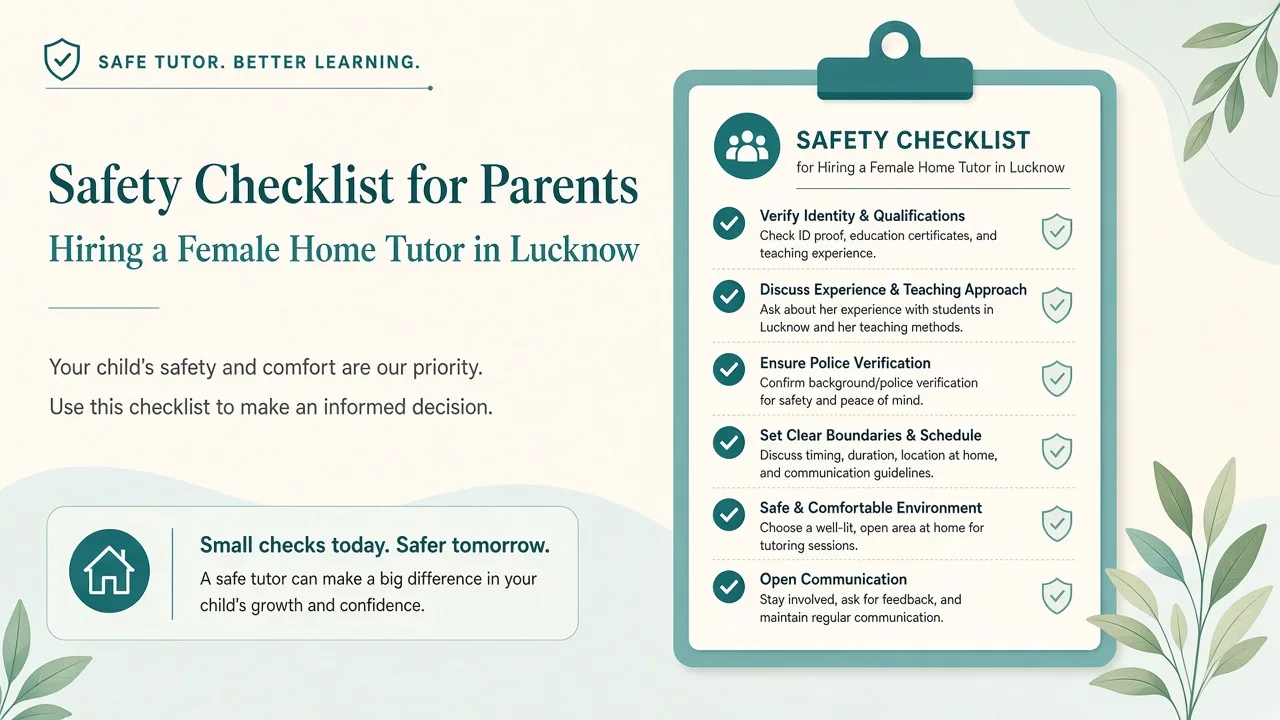
More learning is not always better learning. A few ground rules keep online tutoring healthy:
Keep sessions to about an hour, with a break before the next screen activity.
Protect sleep, outdoor play and family time.
For learners under 18, TutorPapa asks a parent or guardian to give consent at sign-up.
Parents can add their children to their account and follow progress reports.
If anything ever feels wrong, use the Report a concern page.
For a closer look at how students, parents and teachers each benefit, read Empowering Teachers, Students and Parents.
What parents can do at home
The link between school and tutoring often runs through a parent. You do not need to know the subject to help.
Ask about the day, not the marks
"What did you learn in maths today?" opens a better conversation than "How much did you score?" It also helps your child notice what they did not understand, which becomes a question for the tutor.
Keep the notebook moving
Make sure the school notebook, recent tests and homework reach the tutor. Many families take a quick photo of the week's work and share it before the session.
Protect a fixed study time
A regular slot, such as 6 to 7 pm on weekdays, builds a habit far faster than studying "whenever there is time". Keep it free from TV and phones.
Talk to the school teacher too
At parent-teacher meetings, ask the class teacher what your child finds hardest. Pass that on to the tutor. When school and tutor are working on the same problem, progress is quicker.
Take the first step
Start with one subject and one clear goal. Find a tutor, book a demo, and connect what happens in class with what happens at home. If you would like help choosing, post a free requirement, call 9984248424 or 8188998866, or email mytutorpapa@gmail.com.
Frequently asked questions
A good tutor first looks at the school textbook and the teacher’s method, then adds other ways to explain only if they help. Share notebooks and test papers so the tutor stays in step with school.
For one subject, one or two sessions a week is enough for most students. Add more only for a clear reason, such as board exam revision, and keep time free for rest and play.
A tutor can explain concepts, suggest how to plan a project and give feedback, but the work itself should be the student’s own.
On TutorPapa, a parent or guardian must give consent when a learner under 18 signs up, and anyone can use the Report a concern page if something does not feel right.
Looking for a tutor?
Tell us what you need — get matched with verified tutors in 2 hours.